The steps that local Dingle dockers used to walk down to Herculaneum Dock from Grafton Street.



 Dingle Steps
The steps that local Dingle dockers used to walk down to Herculaneum Dock from Grafton Street.


Fantastic Dave, cheers. They stick out like a sore thumb them when driving past. Somewhere I've always wondered about, why they were there, what they are used for now etc. Are they used now or not?
Become A Supporter ?
Donate Via PayPal

Nice one Davey
The steps were not for public use. The steps took men down to the Herculaneum Dock from Grafton St.Originally Posted by Kev

These public housing looking flats are built on the infilled Herculaneum Dock. Nothing in the design incorporated anything relating to the maritime history of the site - these flats could be in an inland town. This development is a complete waste of a once magnificent waterspace, where Liberty ships of the World War Two convoys would muster to leave via the Herculaneum river locks. The blocks in view at the bottom of the steps are built upon the graving docks.
The photo looking at the gas holder: The casemenst into the cliff can be seen. These held explosives and nuclear cargo. A quay ran along the foot of the cliff, where two large cranes which picked up whole railway wagons and tipped them into holds of ships bound for Northern Ireland. Where the flats are to the left was the docks and on the left side small tankers would pump petrol into the Dingle oil tanks which were to the left.
The Herc in 1907. The Dingle petrol tanks can be seen and also the steps (just). The terraced houses off Grafton St, where Bread and the Liver Birds where shot are not yet built. The Overhead can be seen entering Dingle Tunnel and one of the vent shafts on the waste ground.
WW2 convoy ships would be abreast of each other and in rows, facing the river lock. When high tide came they had to get out ASAP, before the tide changed. This method meant they were pulled out fast into the river and were not hanging around being prey for lone bombers. The Germans knew tide times as well.
Last edited by Waterways; 09-20-2006 at 01:17 PM.
The new Amsterdam at Liverpool?
Save Liverpool Docks and Waterways - Click
Deprived of its unique dockland waters Liverpool
becomes a Venice without canals, just another city, no
longer of special interest to anyone, least of all the
tourist. Would we visit a modernised Venice of filled in
canals to view its modern museum describing
how it once was?
Giving Liverpool a full Metro - CLICK
Rapid-transit rail: Everton, Liverpool & Arena - CLICK
Save Royal Iris - Sign Petition
The local ex dockers I've spoken to were treated as slaves and couldn't give a toss about maritime history. They still think it's a novelty to walk down the steps unhindered, without being stopped and searched by some goon.
The dockers would walk through the Herc to the Harrington. They had a pen just off the Herc near the Harrington. The Dock Road was a dead end here with a large gate and policeman, and the dockers pen was inside the gate in a new light brick building on the left before the Herc was reached. Not much general cargo was unloaded/loaded at the Herc, being mainly coal and petro.
The quay from the Harrington lock to the Grafton St cliff was mainly for berthing tugs and floating cranes. I once did see a cargo ship moored there and using its own derricks to unload with small mobile cranes loading the cargo onto trains - may have been a special cargo. Or the other docks must have been full.
Ships would enter the Herc from the Harrington and Toxteth Docks to go through the river locks - one can be seen in the picture entering from the Harrington, but modern ships were far more manoeuvrable than that old steamer. Many ships did not require tugs, as there was enough space to turn the ship in the Herc dock. Once lined up they could run through the locks themselves. Moss Hutchison and Elder Dempster ships would berth at the Harrington and use the Herc river locks. On the river wall of the Herc the river and sea buoys were repaired.
The Herc was built mainly for the graving docks. Ships spent a lot of time in them in the old wooden and iron riveted hull days. As welded steel hulls came about the robustness of hulls was increased and many graving docks were redundant. I can recall a few ships in the Herc graving docks - only a few.
The pic above: The Overhead railways bridge into the Dingle tunnel has been demolished. The photos is the late 1950s/early 1960s. The Harrington Dock transit sheds have not been rebuilt after German WW2 bombings. Ships are seen in the graving docks, a rare site towards the end. A Kelly Line collier is seen in the Herculaneum Dock near to Grafton Street near the coal loading crane.
The Dock Rd ended here. If you drove along the Dock Rd and didn't stop you would end up in the Herc dock.
Built around one of the graving Herc docks. Well this is only a few feet deep. What a shame.
Last edited by Waterways; 09-20-2006 at 04:25 PM.
The new Amsterdam at Liverpool?
Save Liverpool Docks and Waterways - Click
Deprived of its unique dockland waters Liverpool
becomes a Venice without canals, just another city, no
longer of special interest to anyone, least of all the
tourist. Would we visit a modernised Venice of filled in
canals to view its modern museum describing
how it once was?
Giving Liverpool a full Metro - CLICK
Rapid-transit rail: Everton, Liverpool & Arena - CLICK
Save Royal Iris - Sign Petition

How does that answer Daves assertion? ...you went off on a tangent lad >>>>>
No probs
BTW, Operation Eden have been putting letters through local letterboxes asking for stories about the Steps. Waterways, your recollections would be welcome. Please send them to tom.veitch@liverpool.anglican.org

Alright David, long time no see?
Great photos, as per usual.
Have you any pics from the path over Woolton Quarry? It looks pretty similar from up there. Same Legoland-style sousing dumped in the middle as well. Without the water obviously.....
Who was the greatest of them all?
Little, Curly, Alan Ball.
R.I.P. Bally.

You have to admire his re-edit too...
Hiya Mark, how's things? Sorry mate, I don't know Woolton that well and have never really explored the place apart from a photo job (name dropping!) for US rock writer Jim O'Donnell's autumn reprint of his 1996 book The Day John Met Paul: An Hour-By-Hour Account of How the Beatles Began.
In all good book shops from October.gif "Celb (23)")
..and how did it begin?
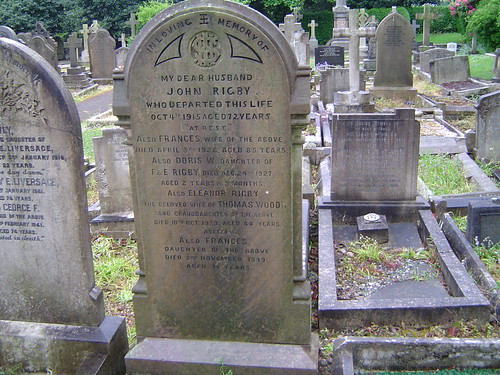
I find it bizarre that there is a gravestone in the churchyard of the church they met in with Eleanor Rigby written on it. Yet Paul McCartney knew nothing of it when writing the song - he tried a few names before hitting on Eleanor Rigby. The song was written over a period of time with a few contributing. Eleanor Rigby is hardly a common name.
The new Amsterdam at Liverpool?
Save Liverpool Docks and Waterways - Click
Deprived of its unique dockland waters Liverpool
becomes a Venice without canals, just another city, no
longer of special interest to anyone, least of all the
tourist. Would we visit a modernised Venice of filled in
canals to view its modern museum describing
how it once was?
Giving Liverpool a full Metro - CLICK
Rapid-transit rail: Everton, Liverpool & Arena - CLICK
Save Royal Iris - Sign Petition

Smashing photos.
My aunty lives in one of those roads leading up from Grafton st. Some great views from there.
@Waterways - great pics, much appreciated.
Become A Supporter ?
Donate Via PayPal

Last edited by john; 09-20-2006 at 05:59 PM.
" If you know your history, then you would know where you coming from".
"I could have been a footballer - but I had a paper round"..Yosser Hughes
 Posting Permissions


 Reply With Quote



Bookmarks