-
Creator & Administrator


Botanic collection to be 08 star
By Paul Coslett
Liverpool’s Botanical Collection, now back on public display at Croxteth Hall, is to have a starring role in 08.
It’s been around for over two hundred years and now back on public display the Liverpool Botanical Collection is to be the subject of an artistic project for 2008.
The collection, which is one of the oldest in the UK, was established in 1802 by one of Liverpool’s most famous sons, William Roscoe.
International visual artist Jyll Bradley is working on ‘Liverpool Fragrant’ which will culminate in an artist’s book telling the stories behind the collection and creating a complete archive of its history.
greenhouse
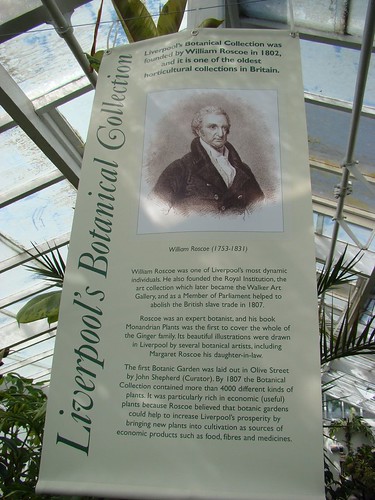
(My pic) On display at Croxteth Hall
The collection will also be exhibited at the RHS Chelsea Flower Show in 2008, the first time since 1962.
Including a stunning orchid section Liverpool Botanical Collection was created at a time when ships from around the world called at Liverpool, bringing plants from tropical countries.
With over 50 different cultivated varieties, Liverpool’s collection, one of the richest in the country, has National Collection status.
Liverpool ship owners like Aigburth’s Richard Harrison imported rare plants which were often unknown to science.
Over the years the collection has expanded through reciprocal trading with other collections around the world.
Some of the plants in the collection are now popular in houses and conservatories but in the days before central heating and global trading they were extremely rare in the UK.
Roscoe, who helped to abolish the slave trade, was a skilled botanist and set up the collection in a Botanic Garden laid out in Olive Street.
plant
The collection was established in 1802
He believed that the collection could help increased Liverpool’s prosperity, as a result many of the plants where acquired to be used as sources of food, fibre and medicine.
The collection was removed from public display in 1984 and for many years was held at nurseries.
A third of the collection is now on display at Croxteth Hall with larger plants in the Sefton Park Palm House.
Eventually it’s hoped to return the entire collection to public display.
Become A Supporter ?
Donate Via PayPal

Tags for this Thread
 Posting Permissions
- You may not post new threads
- You may not post replies
- You may not post attachments
- You may not edit your posts
-
Forum Rules


 Reply With Quote
Bookmarks